What Does My Dog Think I'm Doing All Day?
From glowing screens to mysterious door departures, here is how your dog interprets your stranger human habits throughout the day.
🐾 Free: what would your dog say about you?
Answer 6 questions →Your dog tracks your daily habits through a complex map of smells, subtle sounds, and recurring schedules rather than abstract logic. While you view typing on a laptop or stepping into a shower as routine chores, many owners notice that dogs treat these moments as predictable anchors in their day. By observing how you lace up your sneakers, grab your keys, or open a screen, your companion builds a distinct mental picture of what your world looks like.
Short answer: To your dog, your daily tasks are an intriguing series of sensory routines. They do not understand office politics or remote spreadsheets, but they carefully map your movements using scents, sound cues, and visual habits. A playful way to interpret their perspective is that you are stepping out on daily foraging trips, wrestling noise monsters, or tending to glowing display boxes.

What Does My Dog Think I’m Doing When I Leave the House?
When you walk toward the front door, grab a shoulder bag, and jingle a metal ring of keys, your dog senses an immediate change in the atmosphere. Dogs are exceptionally skilled at reading the small preparation steps that precede a departure. They notice which pair of shoes you pick up, the specific tone of voice you use when saying goodbye, and even how quickly you move across the hallway.
Many owners notice that the departure sequence becomes a predictable event for their pets. If you put on athletic shoes and grab a leash, your dog knows the outcome involves grass, fire hydrants, and fresh air. But when you put on leather boots, apply perfume or cologne, and slide a wallet into a pocket, your dog recognizes that this routine ends with the front door closing behind you without them.
To explore how your companion views the rhythms of your household, you can read more about life from your dog’s perspective to see how everyday schedules shape their understanding of the household.
Without a concept of a nine-to-five workday, a dog relies heavily on scent decay to measure the time you spend away. When you close the door, the air in the living room is filled with your fresh scent. As hours pass, that scent gradually fades in intensity. Many animal behaviorists suggest that dogs can gauge the passage of time by how faint your scent becomes in the room. When the scent drops to a specific threshold, it signals that your usual return time is approaching.
Imagine an illustrative example involving a beagle named Pepper. Whenever Pepper hears the distinct squeak of the kitchen pantry door followed by the clink of ceramic coffee mugs, he knows his human is staying home for a slow morning. But if the metal keys rattle before the coffee mug touches the counter, Pepper moves directly to his floor cushion, knowing a departure is imminent. The dog does not need a wall clock when your habits provide an exact timeline.
The Mysterious World of Work: What Does My Dog Think I Do at Work?
Because your dog cannot accompany you into an office, a warehouse, or a store, your destination remains a grand mystery to them. A playful way to read it is that your dog views your departure as an active expedition outside the safe perimeter of your shared den.
When considering what your dog thinks you do at work, look at the sensory evidence you bring back with you. When you step through the door at the end of the shift, your clothes and skin carry an enormous collection of microscopic scent clues:
- Exhaust and asphalt fumes indicating you traveled across wide, hard surfaces.
- Faint traces of coffee beans, fried foods, or roasted grains suggesting you visited rich food sources.
- Scents of strange humans and other animals picked up from passing strangers, coworkers, or sidewalks.
- Weather elements like damp rainwater, cold wind, or afternoon sun trapped in your fabric coat.
Your dog spends the first two minutes of your return conducting an intensive scent inspection. They sniff your trouser cuffs, trail their nose along your sleeves, and examine your hands. From their perspective, you have been out navigating a noisy, crowded ecosystem where you managed to secure resources without getting eaten by larger creatures.
If you work from home, the mystery takes a different form. You remain physically present in the room, yet you focus your attention entirely on a flat rectangular object on your desk for hours at a time. To a dog, this behavior is fascinatingly quiet. You are sitting in one spot, breathing steadily, occasionally moving your fingers, but making very little interactive progress from a canine point of view.
Glowing Boxes and Clicking Keys: What Does My Dog Think I’m Doing on the Computer?
When you sit down to work on a laptop, your body posture shifts into a calm, stationary mode. To a human, typing on a keyboard is an intense cognitive effort involving emails, code, documents, or data. To your dog, sitting motionless while tapping your fingers against plastic squares is a bizarrely silent ritual.
When asking what your dog thinks you are doing during these long typing sessions, observe how they position themselves relative to your desk. Some dogs sleep directly across your feet, while others place their chin on your knee. They recognize that while your eyes are fixed on the bright screen, you are calm, safe, and stationary.
+-----------------------+----------------------------------+-----------------------------------+ | Human Activity | What You Are Actually Doing | How Your Dog May Interpret It | +-----------------------+----------------------------------+-----------------------------------+ | Laptop Typing | Answering work emails & reports | Staring at a glowing box & clicking| | Video Conference Calls| Meeting with project teams | Talking loudly to an empty wall | | Vacuuming the Rug | Cleaning dirt, dust, and fur | Wrestling a roaring floor beast | | Taking a Warm Shower | Personal hygiene and bathing | Entering a noisy rain closet | | Talking on Speaker | Calling a friend or family member| Hearing ghost voices from a stone | +-----------------------+----------------------------------+-----------------------------------+
Video calls create an even stranger dynamic. When you speak into a headset or look at a laptop screen, your dog hears your voice elevate in pitch and tone, but they cannot smell or see another human in the immediate room. Dogs rely primarily on body language, scent, and spatial context to understand communication. Hearing you talk warmly to a blank plastic screen can lead a dog to tilt their head in confusion, tilt their ears forward, or come over to inspect the floor near your desk to see who you are addressing.
When you pause your typing, sigh, and lean back in your desk chair, your dog immediately senses the drop in your physical focus. The quiet clicking stops, your breathing pattern changes, and the shift in posture serves as an invitation. This is why many dogs instantly appear at your side the moment you finish a phone call or close a laptop screen—they read the subtle physical cues that signal you are transitioning back into interactive household mode.
Decoding Strange Human Rituals: Showering, Vacuuming, and Phone Calls
Beyond working and leaving the home, your day is filled with mechanical routines that must look entirely absurd from a dog’s viewpoint. Your dog spends hours watching you engage with household objects that serve no obvious purpose in the natural world.
The voluntary rain closet
When you step into the bathroom, shut the door, and turn on the shower, your dog hears a sudden deluge of warm water hitting tile. Most dogs view rain as something to avoid or an element that dampens a good walk. Yet, you choose to step inside a small tiled box, soak your entire body in scented soaps, and scrub away all the wonderful natural smells you spent yesterday accumulating.
When you emerge wrapped in a towel, smelling of eucalyptus, mint, or lavender, your dog may immediately try to rub their snout against your legs or lick your hands. This behavior helps re-establish your shared home scent profile, covering up the artificial soap fragrance with familiar group scent notes.
The roaring carpet beast
Few household appliances evoke as much suspicion as the vacuum cleaner. To a dog, this device is a noisy, unpredictable creature that moves across the floor, devours tiny particles, and roars loudly whenever you push it. When you push the machine back and forth across a rug, you are actively guiding a loud object around your living space.
Some dogs react to the vacuum cleaner by barking, herding, or lunging at the nozzle, treating it as a territorial intruder. Others prefer to retreat into another room until the mechanical roaring ceases. When you finally click the power switch off and store the machine in a closet, your dog observes you subduing the appliance and returning the home to peace.
Talking to glass rectangles
When you hold a phone against your ear and pace around the kitchen, you are displaying high-energy vocal behavior without a visible recipient. Your dog sees you walking back and forth, gesturing with your free hand, laughing, or speaking sternly into thin air. Because dogs communicate using full-body postures, eye contact, and clear physical orientation, watching a human talk to a small glass rectangle is a perplexing demonstration of human behavior.
To understand more about general canine communication and how dogs interpret human habits, you can review standard insights on dog behavior to see how scent and sound shape their responses.
What Life Looks Like to My Dog: Scents, Schedules, and Cues
To understand how your companion interprets your day, it helps to pause and look at how what life looks like to my dog differs from our sensory experience. Humans rely heavily on visual cues and abstract temporal concepts like hours, minutes, and days of the week. Dogs, by contrast, navigate their day through an intricate map built of scent trails, atmospheric pressure changes, and acoustic patterns.
Consider how your home shifts in light, sound, and scent across a typical twelve-hour window:
- Early Morning: The smell of brewing coffee, the rustle of cotton bedding, and the bright sound of a refrigerator door opening signal breakfast and the first outdoor excursion.
- Mid-Day Stationary Window: The hum of computer fans, slow steady human breathing, and dim sunlight across the floor mark a period reserved for deep rest, territory monitoring, and scent fading.
- Late Afternoon Transition: The shifting angle of shadows on the carpet, the sound of school buses down the street, and a drop in household ambient heat indicate that the family routine is about to pick up momentum.
- Evening Homecoming: The unmistakable acoustic signature of a specific car engine idling in the driveway, followed by the metallic click of a gate latch, signals the end of the solitary wait.
Dogs excel at connecting these environmental markers to specific outcomes. If you always open a specific kitchen cabinet before pulling out a rubber ball, that cabinet hinge becomes a trigger for excitement. If you always pick up a small cotton tote bag before walking out to collect the mail, your dog recognizes that this brief departure requires no alarm or anxiety.
By observing these micro-routines, your dog creates a structured, comforting sense of predictability within your home. They do not worry about tomorrow’s schedule or yesterday’s mistakes; they respond directly to the sensory environment you are creating right now in the room.
What Would Your Dog Say About Your Daily Habits?
If your dog could translate their daily observations into clear human language, their comments on your daily routines would likely be full of humor, affection, and specific observations about your personal quirks. They notice every time you lose your reading glasses, search for keys, or take an extra biscuit from the kitchen tin.
If you want to discover what your dog might say about your specific home habits, you can try the free six-question experience on our site. It takes about one minute to complete, requires no account sign-up, and uses six simple questions about your dog’s habits to craft a personalized perspective on your daily life together.
What Your Dog Thinks When You Come Home
After hours of quiet waiting, fading scents, and distant neighborhood sounds, the moment your key slides into the front door lock triggers an immediate physiological shift in your dog. Their heart rate elevates, their ears swivel forward, and their tail begins a wide, rhythmic sweep across the floor air.
When exploring what your dog thinks when you come home, it helps to realize that your arrival is often the sensory highlight of their day. You bring a flood of fresh outdoor air, new scents, warmth, and energetic engagement back into a room that has been quiet for hours. To explore the deeper science behind this joyous reunion, read our feature on why your dog gets excited when you come home to see how biological bonding mechanisms drive their reaction.
When you open the front door, your dog does not simply look at you; they take a comprehensive sensory reading of your mood and activities. They evaluate:
- Your posture and facial tension: Dropped shoulders and a relaxed jaw signal that you are calm and ready for affection.
- Your verbal tone: A high-pitched, soft greeting confirms that social bonding is the immediate priority.
- Your hand movement: Hands reaching downward toward their chest or neck provide immediate physical reassurance.
- Your accumulated scents: Sniffing your shoes tells them if you walked through grass, asphalt, wet soil, or crowded indoor spaces.
This intense initial greeting serves to re-anchor your social group. In wild canine groups, returning members are greeted with facial licking, tail wags, and playful body nudges to welcome them back to the pack and exchange scent markers. When your dog leans their body weight against your shins, they are performing a similar social greeting.
To read more about how your pet perceives your emotional role in the household, you can check our guide on what your dog thinks of you to understand the deep security you provide.
Safe and Simple Ways to Enrich Your Dog’s Time While You Are Away
While your dog adapts well to your daily routine, long hours spent waiting for your return can sometimes lead to boredom or quiet restlessness. Providing structured sensory enrichment while you are out helps keep their mind engaged and turns their waiting time into a satisfying, calm experience.
Here are five safe, practical ways to keep your dog mentally stimulated throughout the day:
- Prepare a scent-hunting puzzle: Hide a few pieces of dry kibble or low-calorie dog treats under woven snuffle mats or inside tough rubber puzzle toys before you leave. Hunting by nose uses significant mental energy.
- Leave familiar acoustic background noise: Playing low-volume classical music, soft ambient nature tracks, or radio talk shows can buffer sudden outdoor noises like car horns or passing delivery trucks.
- Provide a dedicated window view: Leave curtains or blinds open slightly in a room overlooking a yard or quiet street, allowing your dog to monitor distant outdoor activity safely.
- Freeze stuffed treat toys: Fill an approved, durable rubber chew toy with plain canned pumpkin, a touch of dog-safe peanut butter (always xylitol-free), or moist kibble, then freeze it overnight to create a long-lasting licking activity.
- Rotate daily toys: Rather than leaving every plush toy on the living room floor constantly, keep a small basket in a closet and offer two different toys each morning to maintain novelty.
When setting up enrichment activities, safe practices must always come first. Review these essential safety reminders before introducing new items to your dog’s solo routine:
- Avoid small chew items: Never leave small plastic toys, cooked bones, or thin rawhide chews unattended, as they can present serious choking hazards.
- Check food safety carefully: Verify that any food used in puzzle toys is safe for canine consumption. Chocolate, raisins, grapes, onions, and the artificial sweetener xylitol are highly toxic to dogs.
- Test toys while you are present: Always observe how your dog interacts with a new rubber toy or snuffle mat while you are home to ensure they do not chew off and swallow large pieces of fabric or rubber.
- Consult your veterinarian: If your dog has food sensitivities, gastrointestinal conditions, or strict dietary limits, ask your veterinarian before introducing new treat fillings or food puzzles.
For additional bonding ideas and mental exercises you can enjoy together when you return home, explore our collection of bonding activities with your dog to strengthen your daily interactive routines.
Turning Their Perspective Into a Keepsake
Once you begin noticing how carefully your dog observes your typing, shoe choices, and evening returns, it becomes natural to imagine what their observations would look like written down on paper. While your dog cannot hold a pen or type an email, capturing their fictional voice creates a lasting memory of this specific season in your lives together.
At Letter From My Dog, we specialize in turning the small, specific details only you know about your dog into tangible keepsakes. Our core offering, Letter From My Dog™ ($7, one-time purchase), is a full personalized letter written from your dog’s perspective. Created from the specific details you share with the help of generative AI, the digital download pack includes Our Bond Story, 10 Little Things Your Dog Loves About Life With You, The Tiny Things™,More Tail Wags bonding ideas, A Memory Worth Keeping, a high-resolution printable PDF, a custom phone wallpaper, and an Instagram story share card.
If you want to explore other personalized formats, we also create a custom personalized dog storybook ($19) that turns your everyday adventures into a digital storybook, as well as a charming Dog Movie Poster Pack™ ($4) that reimagines your dog as the heroic star of their own cinematic feature. Every keepsake is delivered digitally right after purchase, ready to print at home or frame on your wall.
What Does My Dog Think When I Leave for Long Hours?
It is natural to consider what does my dog think when I leave for work, a weekend errand run, or an evening out. Because dogs exist primarily in the sensory present, they do not spend hours dwelling on where you went or feeling bitter about your absence. Instead, as the hours pass, they settle into resting states, occasionally waking to check the perimeter or adjust their sleeping spot.
As your scent gradually dissipates from the living room rugs and furniture, the reduction in your scent signature signals to your dog that time is moving forward. If your routine is consistent, they adapt smoothly to this daily rhythm, learning that a quiet, low-scent afternoon is always followed by the familiar sound of your returning footsteps.
If you want to read more about translating these subtle emotional expressions into words, see our article on what would your dog say if he could talk for inspiration on interpreting their silent communication.
If your dog shows intense distress during departures—such as continuous howling, destructive chewing around door frames, excessive pacing, drooling, or house-soiling when left alone—these behaviors may point to separation anxiety rather than simple boredom. Behavior challenges like severe separation anxiety, sudden behavioral changes, or aggression require professional evaluation. When these signs appear, consult a veterinarian or a certified professional animal behaviorist to build a tailored support plan.
For most dogs, however, the hours spent alone are filled with calm naps, occasional window watching, and comfortable anticipation. They trust the strength of your household routine, knowing that every departure ends with a joyous reunion at the door.
Frequently asked questions
What does my dog think I am doing when I type on my computer?
To your dog, sitting at a desk and typing on a laptop looks like a period of quiet, stationary rest. They do not understand electronic messages or office documents. Instead, they observe your calm posture, low movement, and steady breathing. Many dogs choose to sleep near your feet during typing sessions because your quiet physical state signals safety, predictability, and low stress in the room.
Does my dog know where I go when I leave the house?
Your dog does not know specific geographic locations like an office building, grocery store, or bank. Instead, they understand that you step outside the home territory into an environment filled with complex scents, weather elements, and sound activity. When you return, the microscopic scent clues trapped in your clothing, shoes, and hair tell them stories about the environments you walked through while away.
What does my dog think when I take a shower?
From a dog’s perspective, taking a shower is a strange, voluntary bath in a noisy rain box. Water and strong soaps scrub away your natural body scent, which is why many dogs sniff your legs intensely or try to lick your hands when you step out. They are examining your updated scent signature and working to re-establish the familiar shared household smell.
How does my dog measure how long I have been gone?
Dogs measure time largely through scent decay, environmental shadows, and acoustic cues rather than counting hours. When you close the front door, your fresh scent fills the house. As the hours pass, your scent intensity drops at a predictable rate. When the scent level reaches a familiar low point, your dog recognizes that your typical return window is approaching.
What does my dog think I do when I am vacuuming?
To many dogs, a vacuum cleaner looks and sounds like a loud, erratic creature moving across their living area. They do not understand the concept of picking up dust or pet hair. They see you pushing a noisy appliance around the floor, which can trigger protective barking, herding behaviors, or a desire to move to a quiet back room until the device is turned off.
Does my dog think I am talking to them during phone calls?
When you speak during phone or video calls, your dog hears your energetic voice but cannot see or smell another human present. This sensory mismatch can confuse them. If you speak in a happy, high-pitched voice, your dog may assume you are addressing them and wander over for affection, only to realize your visual focus is directed toward a screen or handheld device.
Keep reading
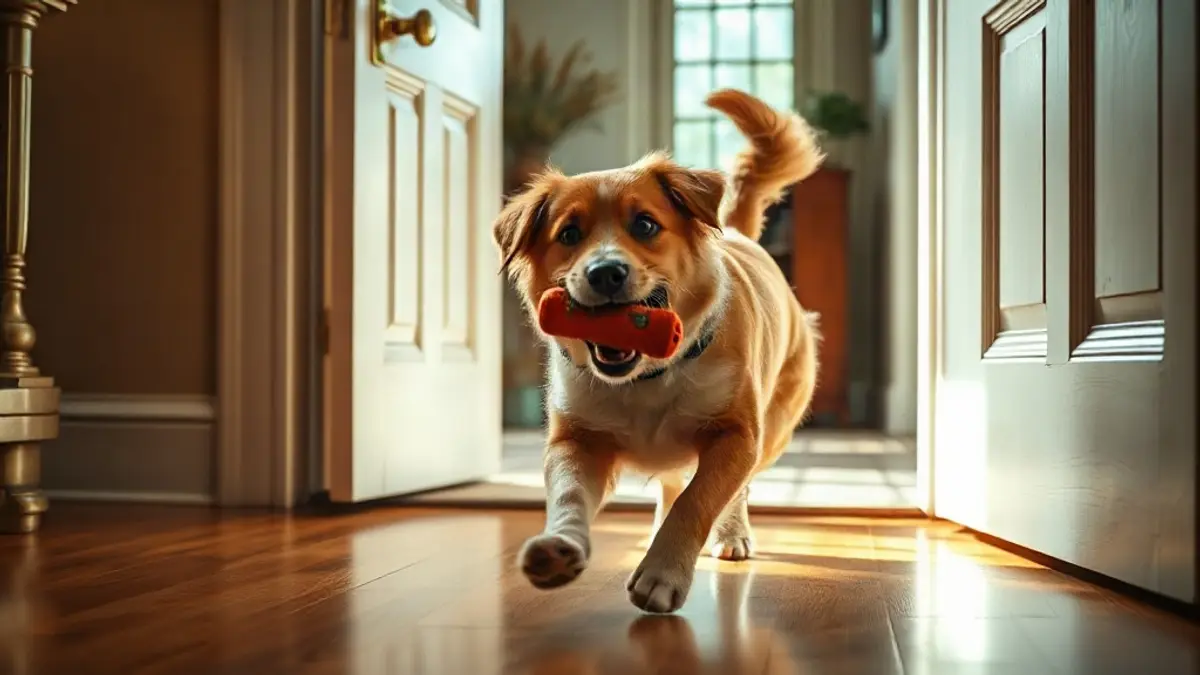
Why Does My Dog Get Excited When I Come Home?
From full-body wiggles to shoe offerings, the front door greeting is your dog's daily masterpiece of joy.
My Life From My Dog's Perspective: A Day in Their Paws
A warm feature on seeing your daily routines through your dog's eyes, plus practical tips for writing your own pet POV narrative.
What Would My Dog Say If He Could Talk?
Your dog expresses affection, humor, and daily preferences through micro-behaviors that you can easily translate into plain English.