Letter From Dog to Owner: What It Would Really Say
What your dog would put on paper isn't a poem—it's an honest, funny account of your shared household rituals and quiet moments.
🐾 Free: what would your dog say about you?
Answer 6 questions →A genuine letter from dog to owner is not built on poetic speeches or grand declarations. It is constructed from the small, hyper-specific realities of your shared household: the sound of your keys dropping into the entryway bowl, the exact cushion where two bodies fit on the sofa, and the silent negotiation over a dropped piece of cheese. While dogs do not write sentences, capturing their perspective through creative writing allows humans to honor the hilarious, comforting daily rhythms that define living together.
Short answer: A true letter from dog to owner captures concrete daily habits rather than generic sentiment. It highlights specific quirks—like waiting by the bathroom door, stealing stray socks, or resting a chin on your knee during quiet evenings. Writing a keepsake letter translates everyday eye contact, routines, and quiet companionship into an affectionate narrative grounded in your real life together.
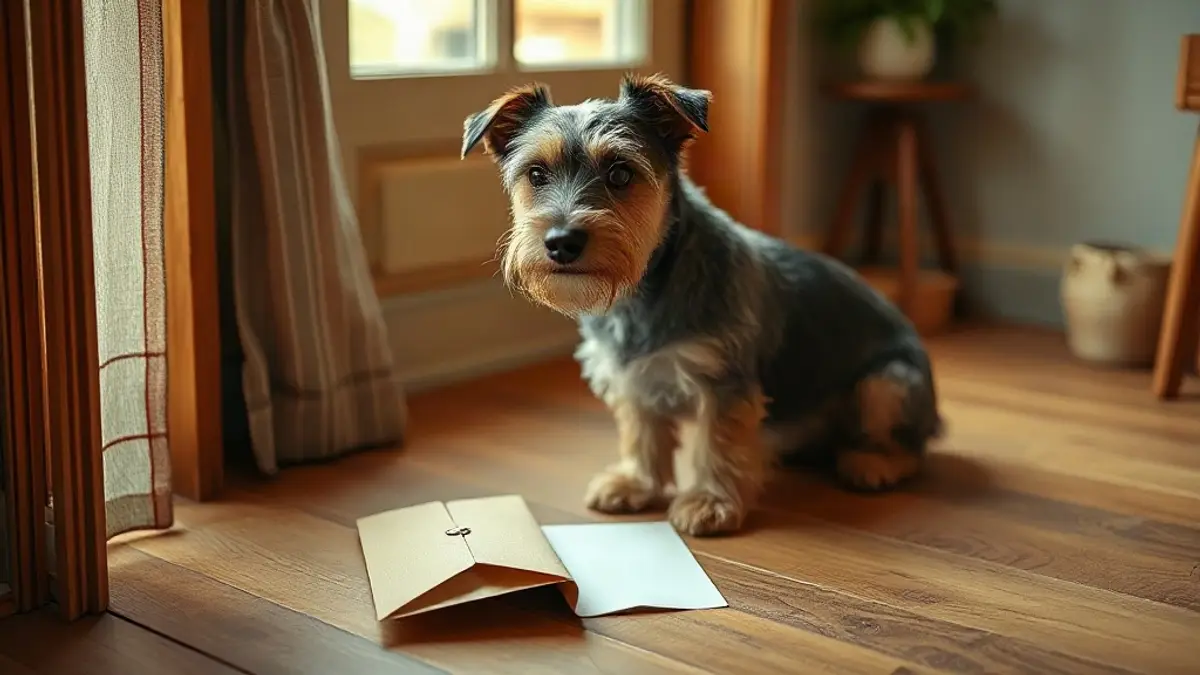
What a Letter From Dog to Owner Would Really Say
If your dog suddenly gained the ability to type a message, the draft wouldn’t sound like a greeting card. It wouldn’t use lofty metaphors about eternal devotion. Instead, a genuine letter from dog to owner would focus heavily on logistics, sensory details, and micro-routines.
Dogs are masters of observation. They know which shoe movements mean a trip to the backyard versus a walk around the block. They know the exact sound of the refrigerator drawer that holds the cheese. Playfully imagining their thoughts through creative writing—a concept often explored through anthropomorphism—is a way to mirror back the attention they pay to us every single day. A letter written from this viewpoint mirrors the humor and comfort of living with a companion who watches your every step.
When we draft a letter from a dog’s point of view, we are building a narrative bridge. It is not literal canine communication, but rather a reflective mirror of human-dog life. It translates the tilt of a head when you open a potato chip bag, the sigh of relief when you sit on the couch after work, and the persistent warmth of a sleeping body against your feet into written words.
The Anatomy of a Genuine Dog Letter to Owner
To make a dog letter to owner feel authentic, it needs structure grounded in reality. Skipping generic praise in favor of observable moments creates a keepsake that feels true to your specific life. Here is how a great dog letter breaks down section by section.
1. The Opening Greeting
Avoid formal introductions. A dog doesn’t address you by your full name; they address you by your role in their immediate environment. The opening should reflect how they greet you in person—energetic, slightly impatient, and full of immediate recognition.
2. The Daily Ritual
Focus on one hyper-specific routine. Is it the morning cup of coffee where they sit on your slippers? Is it the mid-afternoon check-in where they rest their snout on your desk? Highlighting these moments grounds the note in your actual environment.
3. The Ridiculous Habit
Every dog has a strange preference that makes no sense to outsiders. Maybe they insist on licking the air after eating peanut butter, or perhaps they refuse to step on wet grass. Including a peculiar habit keeps the tone playful and lighthearted.
4. The Shared Memory
Recall a specific event from their perspective: the rainy day you both got soaked, the time a squirrel took over the bird feeder, or a trip to the park where they found a particularly excellent stick. If you want to dive deeper into structuring these ideas, reading a guide on writing from a dog’s perspective can give you fresh angles.
5. The Thank-You
Thank-yous from a dog aren’t about big purchases; they are about comfort and safety. They thank you for soft blankets, scratch spots right behind the left ear, and forgiving them when they barked at the delivery driver.
6. The Sign-Off
End with an action rather than a formal closing. A sign-off might reference waiting by the door, napping in a sunbeam, or keeping your spot warm until you return.
Generic Heartstrings vs. Specific Reality: A Side-by-Side Look
Many pet keepsakes rely on vague, sentimental phrases that could apply to any animal anywhere. But the magic of a letter to me from my dog comes from details that could only belong to your household.
| Feature | Generic Dog Letter | Specific, Reality-Based Dog Letter |
|---|---|---|
| Tone | Overly poetic and dramatic | Observational, warm, and slightly practical |
| Focus | Vague concepts like loyalty | Concrete events like the 6:00 AM breakfast dance |
| Personality | Generic friendly pet | Your dog’s exact quirks and attitude |
| Details | ”I love our walks" | "I love when we stop at the blue mailbox so I can sniff the post” |
| Emotional Impact | Feels like a standard card | Feels like a personal snapshot of your home |
When writing or generating a letter from dog to human, choosing specific details over broad statements makes the text come alive. If you prefer to review a full text example before creating your own, exploring a full line-by-line letter example shows how small moments build a convincing voice.
Fictional Case Study: Pepper the Beagle Writes Home
To see how specific details change the feel of a letter, imagine a fictional four-year-old beagle named Pepper who lives in a third-floor apartment with her owner, Sam. Pepper is obsessed with roasted chicken, terrified of the vacuum cleaner, and convinced that every stray sock left on the bedroom floor is a personal gift.
Here is what a fictional letter from Pepper to Sam might look like:
“To Sam,
First of all, the kitchen floor draft is fixed, but you still drop small pieces of cheddar near the island on Tuesdays, which I appreciate.
I want to discuss our morning walk routine. When you pick up the red leash, I do three fast spins. This is not because I am confused; it is because the leash means outdoor business. I know you think we walk so I can exercise, but really I am inspecting the perimeter of the apartment block. The bush by the mailbox had three new scents today. I tried to explain this to you, but you just pulled out your phone.
Thank you for letting me sleep on the fleece blanket even though I take up the middle of the mattress. Also, when that loud rolling monster comes out of the closet on Thursdays, I appreciate that you let me hide behind your legs. You are very brave against the closet monster.
Please leave the bedroom door open tonight. The sock under the chair is mine now, but I will let you wear it tomorrow if you ask nicely.
— Pepper”
Notice how Pepper’s fictional letter doesn’t talk about grand abstract ideas. It talks about cheddar, socks, and the vacuum cleaner. That specificity is what makes writing a letter from my dog to me feel authentic and enjoyable.
How to Draft a Letter From My Dog to Me
Writing your own letter doesn’t require advanced literary skills. It simply requires paying close attention to your dog’s daily routines. If you are wondering what your dog thinks of you, start by listing their physical reactions to your habits.
Follow these steps to build your letter:
- Identify the morning trigger: How does your dog wake you up? Do they stare quietly from six inches away, pat your face with a paw, or do a full-body stretch across your ribs?
- Pick two specific sensory obsessions: Name the exact treat bag sound, tennis ball texture, or sidewalk spot that drives them wild.
- Document a shared habit: Write down the routine you perform together every day without thinking, like sharing the end of a banana or watching television on the recliner.
- Address a mild misunderstanding: What does your dog clearly misunderstand about human life? (e.g., assuming thunderstorms are caused by the mail carrier, or thinking work calls are conversations directed at them).
- Express gratitude through comfort: Describe how your dog seeks comfort from you when they are tired or startled.
If you want a fun way to gather these ideas without writing from scratch, you can try the free six-question experience. It takes about a minute, requires no signup, and asks key questions about your dog’s routines to reveal what they might say about life with you.
Decoding the Everyday Rituals Behind the Words
Every line in a creative letter corresponds to real, observable canine behaviors. When we translate these actions into human language, we highlight the quiet ways dogs build their days around us.
The Greeting at the Door
When you return home, your dog’s reaction isn’t just excitement—it is relief and recognition. Whether they bring you a shoe, perform a low-wag tail swoop, or run in circles, they are signaling that the household is complete again. Many owners wonder why your dog follows you from room to room, and the answer often comes down to social connection and environmental monitoring.
The Silent Stare
Dogs spend hours observing human body language. If your dog stares at you while you sit on the couch, they might be reading your facial expressions, waiting for a cue, or simply resting in your presence. In a letter, this translates to: “I am keeping an eye on things while you read your computer screen.”
The Post-Meal Stretch
After eating, many dogs execute a deep stretch before finding a nap spot. It is a moment of total contentment. In their written voice, this represents satisfaction with household management—a job well done by the food provider.
Translating Dog Body Language into Written Words
When turning behavior into text, understanding basic canine signals helps maintain a grounded perspective. While we shouldn’t confuse creative writing with veterinary advice, reflecting natural behaviors adds depth to your letter.
- Ear Position: Soft, relaxed ears translate to a calm, relaxed tone in writing. Pricked ears signal curiosity about outdoor sounds.
- Tail Movement: A loose, broad tail sweep means relaxed engagement. A held, still tail means intense focus on a stray squirrel.
- Leaning Against Your Legs: Physical contact often signals trust and a desire for proximity. In a letter, this becomes: “I am anchoring myself here because this is home base.”
- Sighing Deeply: When a dog curls up and lets out a long exhale, it usually indicates relaxation. In text, it functions like a satisfied closing statement.
When observing sudden behavioral changes, anxiety, or physical signs of discomfort, always consult a veterinarian or a certified professional rather than relying on playful interpretation. For general physical care guidelines, resources like the ASPCA dog care guide offer essential reference information.
Creative Keepsakes: Turning Your Dog’s Story Into Something Real
Capturing your dog’s personality in words creates a lasting memory of your time together. Transforming those thoughts into a tangible or digital keepsake lets you celebrate your pet’s presence while they are right by your side.
If you want a polished version of this idea, the Letter From My Dog™ keepsake ($7, one-time purchase) offers a complete personalized package built from the unique details you share about your home. Each order is created from the details you share, with the help of generative AI, delivering a tailored text experience without any recurring subscriptions. The package includes your customized letter, Our Bond Story, 10 Little Things Your Dog Probably Loves About Life With You, The Tiny Things™, bonding activity prompts, and a high-resolution printable PDF alongside digital formats like phone wallpaper and social media share cards.
For readers who want to explore other personalized formats, you can also check out a personalized digital dog storybook ($19) for an illustrated narrative approach, or transform your pet’s dramatic side into a visual statement with a Dog Movie Poster Pack™ ($4).
Keeping the Perspective Alive in Daily Life
Writing a letter from dog to human isn’t just a one-time exercise; it changes how you look at your daily interactions. Once you start viewing your living room through your dog’s eyes, small frustrations turn into moments of quiet humor.
When your dog steals a warm spot on the bed the second you stand up, you stop seeing an inconvenience and start seeing a compliment. When they insist on watching you fold laundry, you realize they view household chores as a shared team sport. If you ever find yourself contemplating the list of things your dog wants to tell you, simply look at how they position themselves in your home throughout the day.
Living with a dog means participating in a constant, unspoken dialogue. Capturing that dialogue in a letter keeps the focus where it belongs: on the funny, warm, and delightfully uncomplicated routine of sharing your home with a companion who thinks you are the center of the universe.
Frequently asked questions
How do I know what details to include in a dog letter?
Start with your dog’s most distinct daily habits. Think about how they wake you up, their reaction to the leash, their favorite nap spot, and any weird quirks like carrying around a specific toy. The more specific the detail, the more genuine the letter will feel.
Is writing a letter from my dog accurate to dog behavior?
It is a creative interpretation rather than literal science. While we cannot know exact thoughts, dogs express clear preferences, emotions, and attachments through body language and routine. Translating those observable behaviors into words is a playful way to celebrate your daily life together.
What if my dog has multiple owners or a full family?
A letter can easily be written from the dog to the entire household. You can highlight how the dog views each family member’s specific role—such as who gives the best treat scraps, who plays fetch, and who is preferred for quiet evening naps.
Can I make a letter for a rescue dog whose past I don’t fully know?
Yes. Focus heavily on their current life, safety, and home routines. You can playfully mention how glad they are to have swapped their uncertain past for soft dog beds, regular meal schedules, and their favorite spot on your couch.
What is the best length for a keepsake letter from a dog?
A letter from a dog works best between 300 and 700 words. This length allows enough space to include three or four specific daily anecdotes, a warm thank-you, and a funny sign-off without becoming repetitive or overly formal.
Should I include dog health or behavioral issues in a keepsake letter?
Keep the tone lighthearted and focused on positive household routines. If your dog experiences severe anxiety or physical pain, address those concerns directly with a veterinarian or certified animal trainer, keeping keepsake letters focused on comfort and fun.
Keep reading
How to Write a Letter From Your Dog's Perspective
A practical guide to capturing your dog's voice on paper using concrete daily details, warmth, and observant humor.

Sample Letter From Dog: A Full Example, Line by Line
Read a full, line-by-line sample letter from a dog, see how simple owner memories transform into meaningful text, and learn how to draft your own.
Things My Dog Wants to Tell Me (But Can't)
If your dog could leave a note on the kitchen counter, it would be full of tiny observations only you two share.